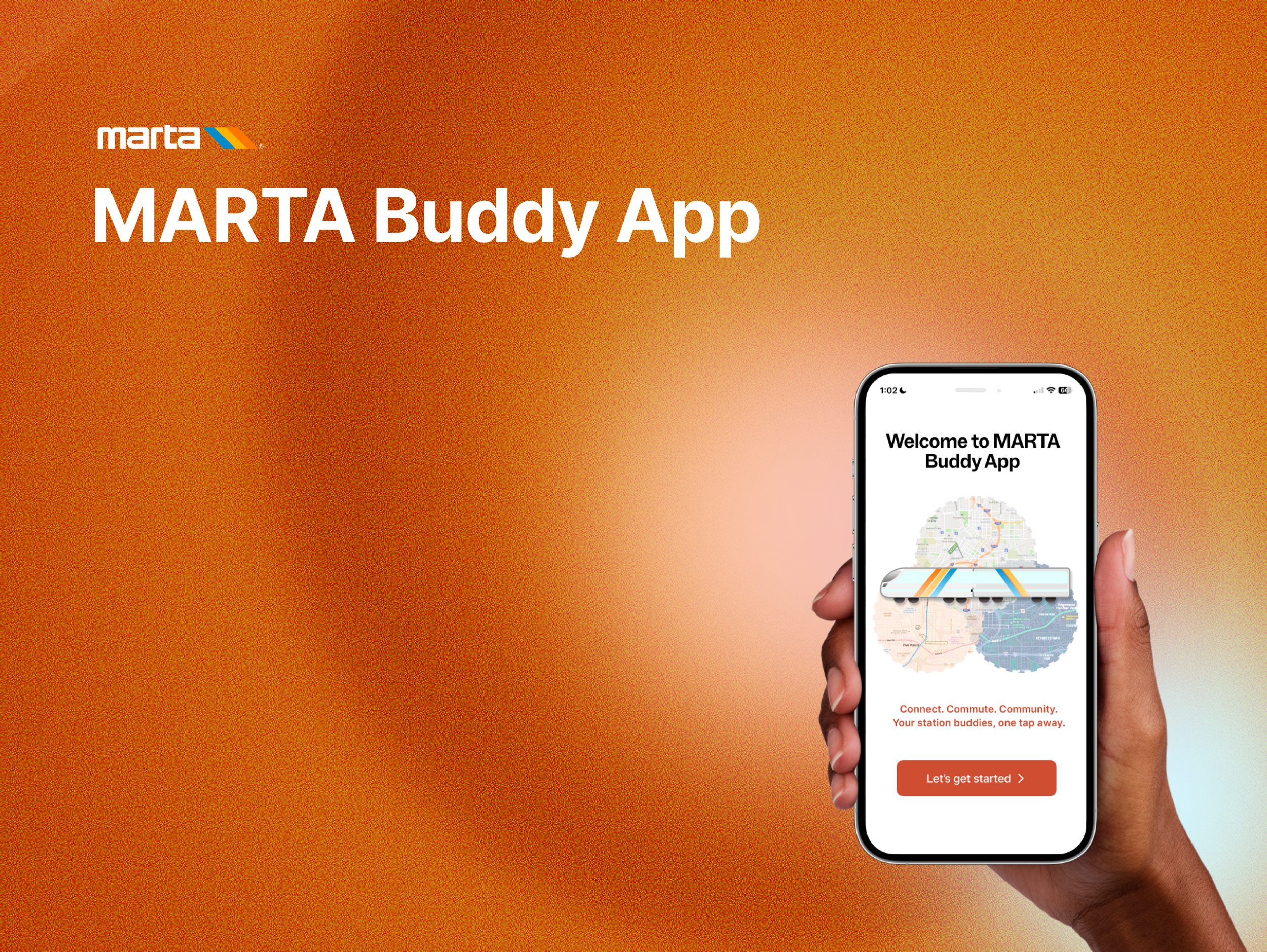
Improving Public Transportation Experience for College Students in Atlanta
Timeline
August-December 2024 (5 months)
Tools
Figma, Qualtrics, Unity, Protopie, Indesign, After Effects
Project Summary
Roles & Responsibilities
UX/UI and VR Design, End-to-End Hi-Fi Prototyping, Stakeholder Engagement
Team
Vibha Maheshwari, William Downs, Theresa Antony, Bon Bhakdibhoomi
Spearheaded the brand redesign of ACME’s Intranet, reducing employee task friction by 40% and transforming the platform into community where employees contribute, work and thrive.

OVERVIEW
TRAVELLING WITH A BUDDY TO INCREASE SAFETY
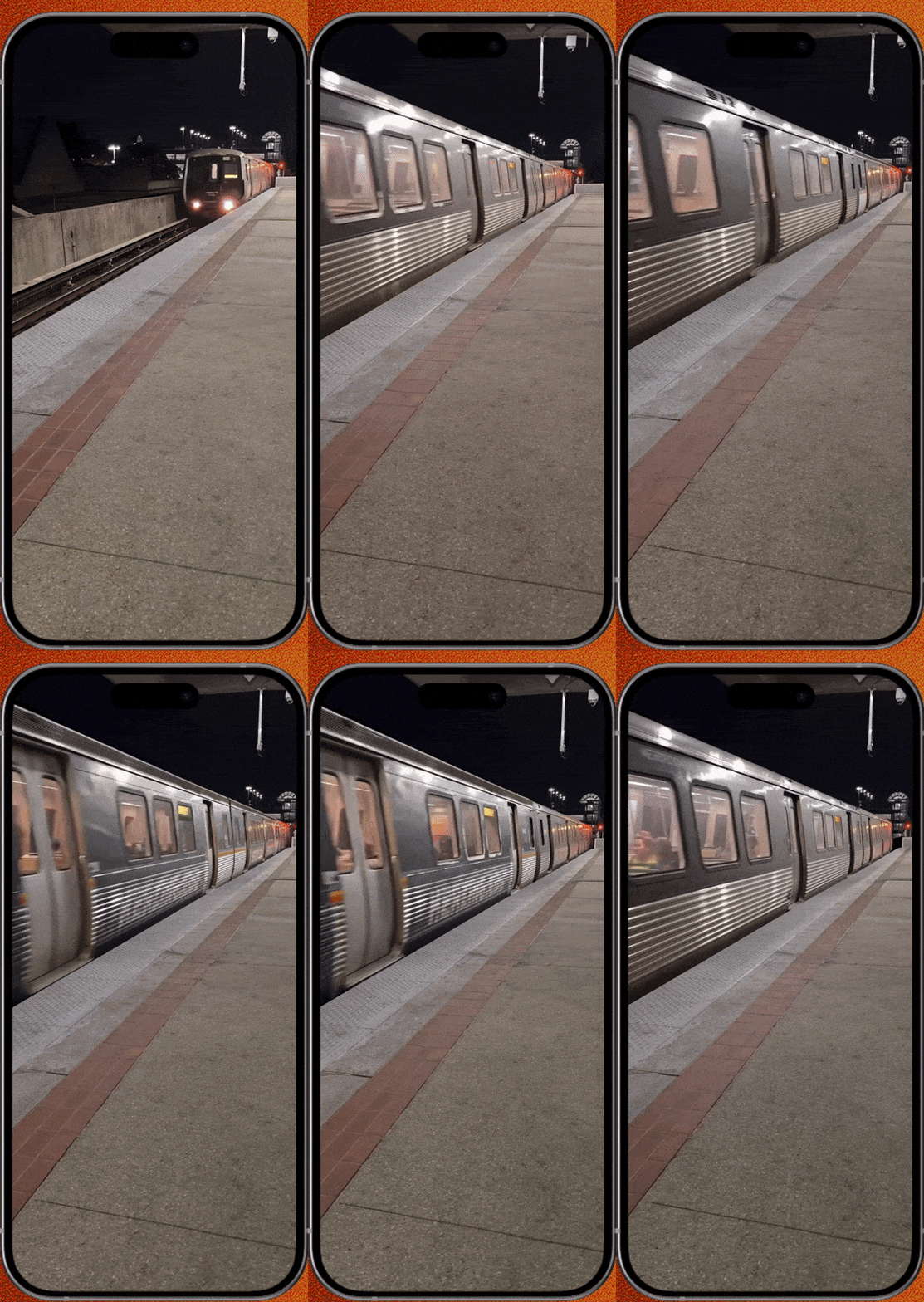
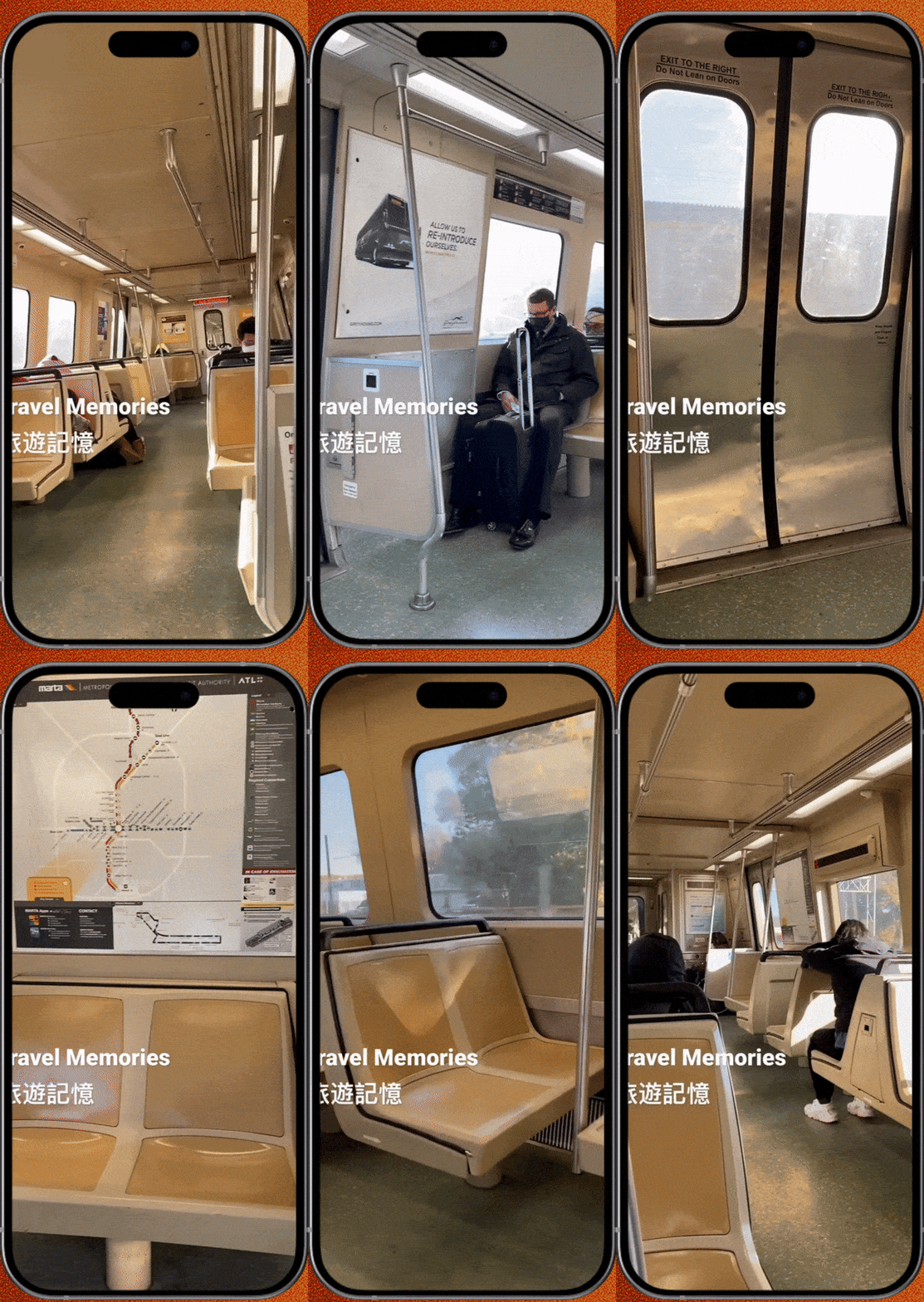
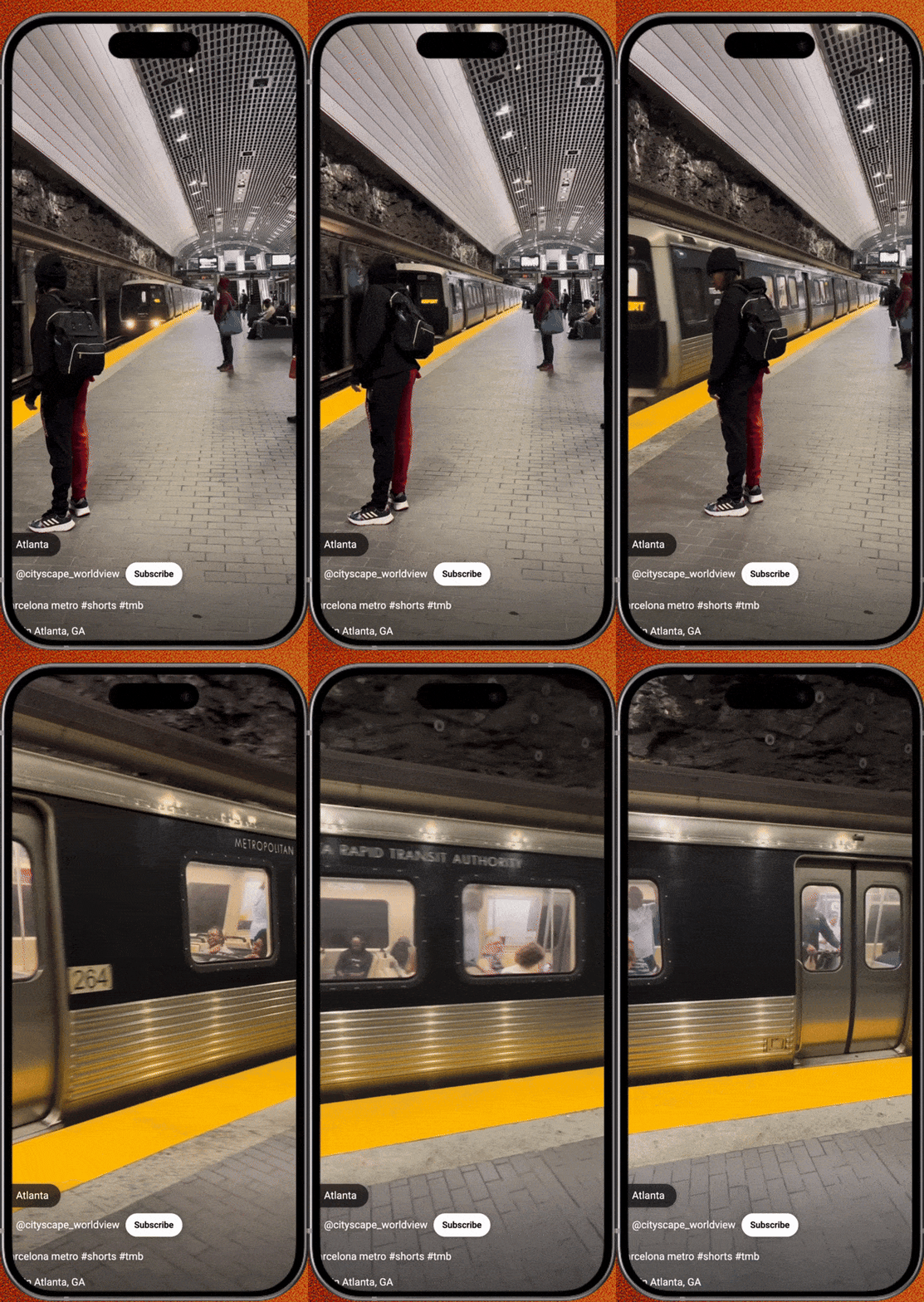
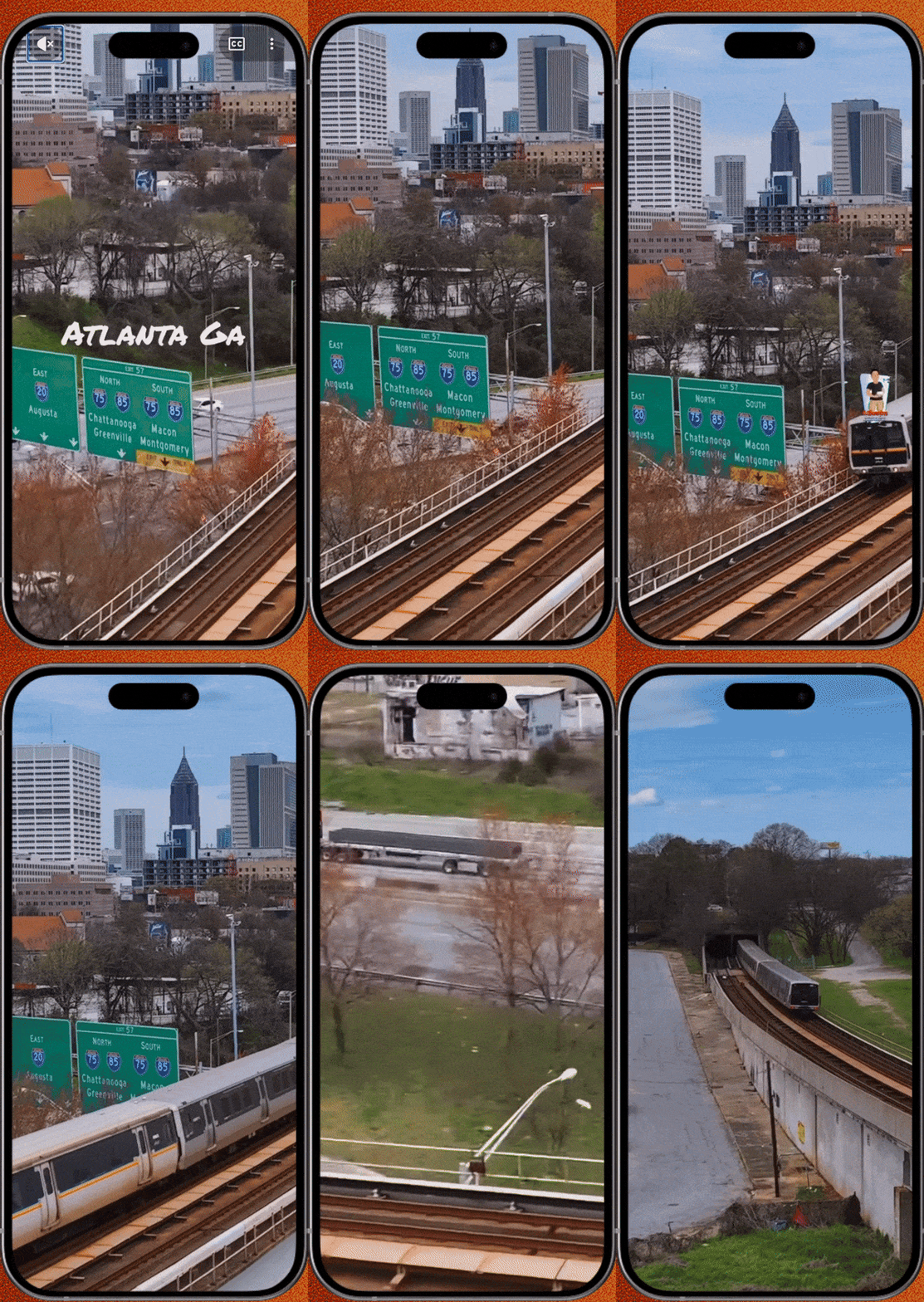
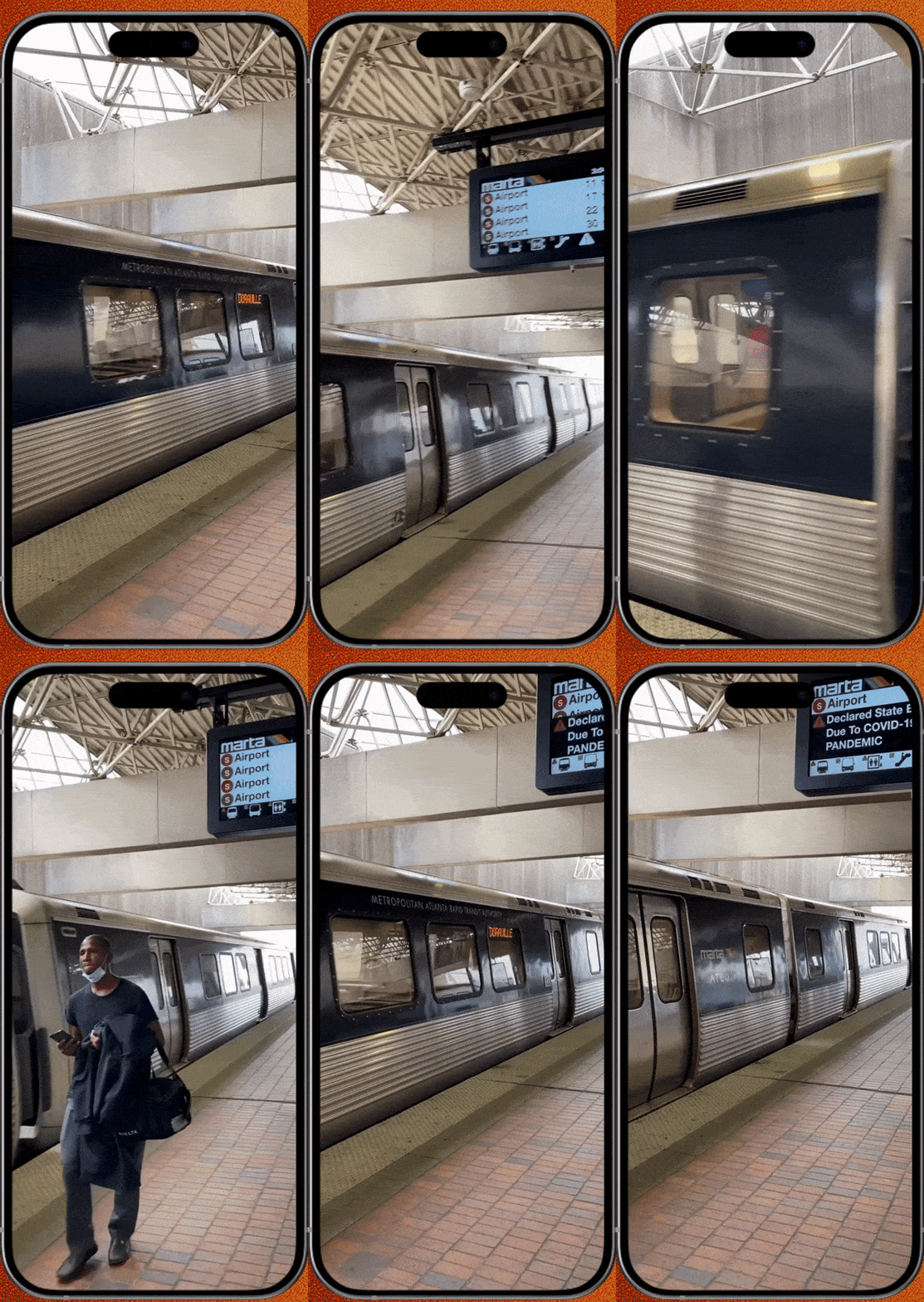
Life in Atlanta is as bustling as it gets- students from all over the world cojoin at the heart of most rapidly expanding southern metropolitian city area, crossing paths at intersections threaded together by the city's MARTA metro railways. Atlanta continues to draw new sets of eyes as the economic epicenter of the Southeast, hosting reputable tech and film industries year after next. So it came as suprise that MARTA does not hold a reputation at par.
Back-fence conversations reveal that transit system is generally not considered safe, clean or reliable- and all for good reasons. The Breeze 2.0 App’s interface isn’t exactly the most user-friendly, the metro schedules are hard to navigate and the last thing you want to arrive to is a broken kiosk or elevator, especially if you’re with a bike or wheelchair.
Objectives;
My Role:
PROBLEM SPACE
The Gap Between Perception and Reality
Atlanta has always been a car-first city by design. Decades of suburban sprawl and underfunded public transit have left MARTA covering less ground than it needs to- and the areas it doesn't reach tend to be the ones where students live. When MARTA is accessible, students still don't use it. Not because the trains don't run, but because the story told about the trains runs louder.
Word-of-mouth travels fast on campus- stories of unsafe platforms, confusing kiosks, dirty cars, and unreliable schedules pass between students before they've ever swiped a Breeze card. The result: a transit system that averages 180,000 rides a day is essentially invisible to a population of thousands of college students living within walking distance of its stations.
The problem lies in a deeper issue of trust. Students don't trust the MARTA, and MARTA's current touchpoints do little to earn it back. Poor information design, inconsistent safety signaling, and a complete absence of a student-facing experience mean that every first encounter reinforces the worst assumptions of public transit, rather than challenging them.
Underlying barriers for Lack of Trust in MARTA
Reputation
BACKGROUND RESEARCH
Fragmentation
City Disconnection
Who are the users who share these painpoints?
TARGET AUDIENCE